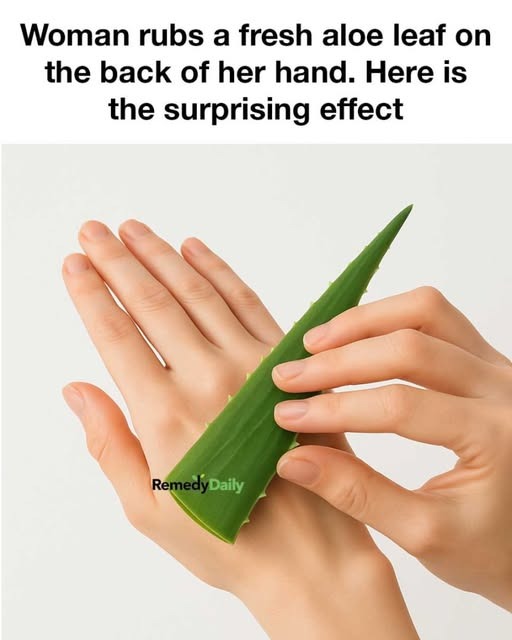
Aloe vera, often referred to as the ‘plant of immortality,’ has been used for centuries for its healing properties. This succulent plant, with its thick, fleshy leaves, is a common household remedy for minor cuts and burns. However, its benefits extend far beyond simple wound care. Recently, a viral trend has emerged where individuals rub fresh aloe vera leaves directly onto their skin, particularly on the back of their hands, to harness its full potential.
In this article, we explore the surprising effects of applying fresh aloe vera directly to the skin. From its ancient uses to modern-day skincare hacks, we delve into the science behind aloe vera’s benefits and provide insights into its immediate and long-term effects on the skin. Whether you’re a skincare enthusiast or simply curious about natural remedies, this guide will illuminate the myriad ways aloe vera can enhance your skin health.
Advertisement
1. The Ancient Healing Properties of Aloe Vera
Aloe vera has been revered for its medicinal properties for over 6,000 years. Ancient Egyptians referred to it as the ‘plant of immortality’ and included it in burial rituals for pharaohs. The plant’s gel-like substance was used to treat wounds, burns, and infections due to its antibacterial and anti-inflammatory properties.
In traditional Chinese medicine, aloe vera is used to treat fungal diseases, while in Ayurvedic medicine, it is known as ‘Kumari’ and is used to improve skin health and digestion. The plant’s healing properties are attributed to its rich composition of vitamins, enzymes, minerals, sugars, lignin, saponins, salicylic acids, and amino acids. Specifically, aloe vera contains vitamins A, C, and E, which are antioxidants that help neutralize free radicals.
2. How Aloe Vera Became a Viral Skincare Hack
The rise of social media platforms has led to the rapid spread of skincare trends, and aloe vera has not been exempt. Beauty influencers and skincare enthusiasts have popularized the practice of rubbing fresh aloe vera leaves directly onto the skin, showcasing its immediate soothing effects in short video clips.
This trend gained traction due to aloe vera’s reputation for being a natural, chemical-free alternative to commercial skincare products. Users have reported instant relief from sunburns, reduced redness, and a noticeable glow after application. The simplicity of cutting a leaf and applying the gel directly appeals to those seeking a minimalist skincare routine.
3. The Science Behind Aloe Vera’s Skin Benefits
Aloe vera’s skin benefits are largely due to its high water content (over 99%) and the presence of polysaccharides, which help retain moisture and promote skin repair. The plant also contains gibberellins and auxins, hormones that promote wound healing and have anti-inflammatory properties.
Studies have shown that aloe vera can increase collagen production and improve skin elasticity, making it a valuable ingredient in anti-aging products. The plant’s gel also contains lignin, which enhances the penetrative effect of other ingredients, allowing nutrients to reach deeper layers of the skin.
4. Immediate Effects of Aloe Vera on Skin
When a fresh aloe vera leaf is rubbed onto the skin, the immediate effect is a cooling sensation, which provides instant relief from irritation and inflammation. This is particularly beneficial for sunburned skin, as the gel soothes and hydrates the affected area.
Within minutes of application, users often notice a reduction in redness and a calming of any itching or discomfort. The gel forms a protective barrier on the skin, locking in moisture and preventing further irritation from environmental factors.
5. Long-Term Skin Benefits of Regular Aloe Vera Use
Regular use of aloe vera on the skin can lead to significant improvements in skin texture and appearance. The plant’s ability to stimulate fibroblast activity enhances collagen and elastin production, which helps reduce the appearance of fine lines and wrinkles.
Consistent application can also help fade dark spots and hyperpigmentation due to the presence of aloesin, a compound that inhibits the enzyme responsible for melanin production. Over time, skin becomes more even-toned and radiant.
6. Surprising Anti-Aging Properties of Aloe Vera
Aloe vera’s anti-aging properties are attributed to its ability to boost collagen production and improve skin elasticity. The plant’s gel contains sterols, which help retain moisture and improve skin barrier function, reducing the appearance of fine lines.
Additionally, aloe vera’s antioxidant content helps fight oxidative stress, a major contributor to skin aging. By neutralizing free radicals, aloe vera protects the skin from premature aging and maintains a youthful appearance.
7. Aloe Vera’s Role in Reducing Skin Irritation
Aloe vera is renowned for its anti-inflammatory properties, which make it effective in reducing skin irritation and redness. The plant’s gel contains compounds like bradykinase, which helps reduce excessive inflammation when applied topically.
For individuals with sensitive skin or conditions like eczema and psoriasis, aloe vera can provide relief by calming flare-ups and reducing itching. Its gentle nature makes it suitable for all skin types, including those prone to allergic reactions.
8. How Aloe Vera Moisturizes and Hydrates the Skin
Aloe vera is an excellent natural moisturizer due to its high water content and ability to penetrate the skin deeply. The gel forms a protective layer that locks in moisture without leaving a greasy residue, making it ideal for oily and acne-prone skin.
The polysaccharides in aloe vera help bind moisture to the skin, ensuring long-lasting hydration. This makes it a popular ingredient in moisturizers and hydrating masks, particularly for those living in dry climates or dealing with dehydrated skin.
9. Tips for Choosing the Best Aloe Vera Leaf
When selecting an aloe vera leaf for skincare, look for leaves that are thick, plump, and vibrant green, as these are likely to contain more gel. Avoid leaves with brown spots or signs of wilting, as these may indicate poor quality or age.
For optimal freshness, choose leaves that are harvested from mature plants, typically those that are at least three years old. This ensures the gel is rich in nutrients and effective for topical application.
10. Common Mistakes When Using Aloe Vera on Skin
One common mistake is not conducting a patch test before applying aloe vera gel to the entire face or body. While rare, some individuals may experience allergic reactions, so it’s important to test a small area first.
Another mistake is using aloe vera gel that has been exposed to air for too long, as it can oxidize and lose its potency. To prevent this, store the gel in an airtight container in the refrigerator and use it within a few days of extraction.
11. Other Surprising Uses of Aloe Vera in Skincare
Beyond its use as a moisturizer and anti-inflammatory agent, aloe vera can be used as a natural makeup remover. Its gentle formula effectively breaks down makeup without irritating the skin.
Advertisement
Aloe vera can also be used as a soothing aftershave treatment, reducing razor burn and preventing ingrown hairs. Its antibacterial properties help prevent infection and promote healing of minor nicks and cuts.