Even compact tomato varieties benefit from support to keep the plants upright and prevent damage to the stems and fruit. Use stakes or tomato cages to provide the necessary support. For determinate varieties, a simple stake or small cage will suffice.
For indeterminate varieties, use a sturdy cage or a combination of stakes and twine to support the taller growth. Secure the main stem to the support structure with soft ties to avoid damaging the plant.
9. Prune and Pinch for Better Growth
Pruning is an important practice to encourage healthy growth and increase fruit production. Remove the suckers, which are the small shoots that grow in the leaf axils, to direct the plant’s energy towards fruiting rather than foliage.
For indeterminate varieties, consider removing the lower leaves as the plant grows to improve air circulation and reduce the risk of disease. Be careful not to over-prune, as some foliage is necessary for photosynthesis and overall plant health.
10. Monitor for Pests and Diseases
Regularly inspect your tomato plants for signs of pests and diseases. Common pests include aphids, whiteflies, and tomato hornworms, which can be controlled with insecticidal soap or neem oil.
Fungal diseases like blight and powdery mildew can be prevented by ensuring good air circulation and avoiding overhead watering. If you notice any signs of disease, remove affected leaves immediately and consider using a fungicide if necessary.
11. Rotate and Refresh Soil Annually
To prevent soil-borne diseases and nutrient depletion, it’s important to rotate your crops and refresh the soil each year. If possible, avoid planting tomatoes in the same container year after year.
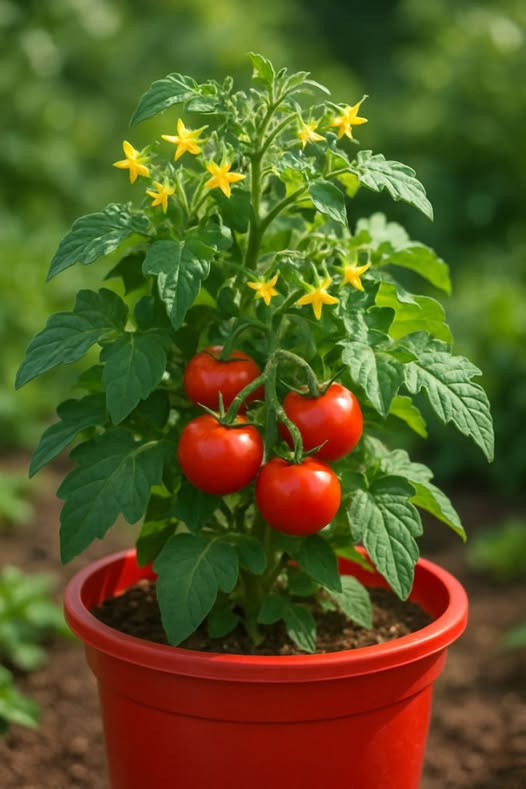
Most get this wrong. 10 essential tips for growing tomatoes in containers
At the end of the growing season, remove the old soil and replace it with fresh potting mix. This practice helps maintain soil fertility and reduces the risk of disease, ensuring your tomatoes have the best possible start each season.