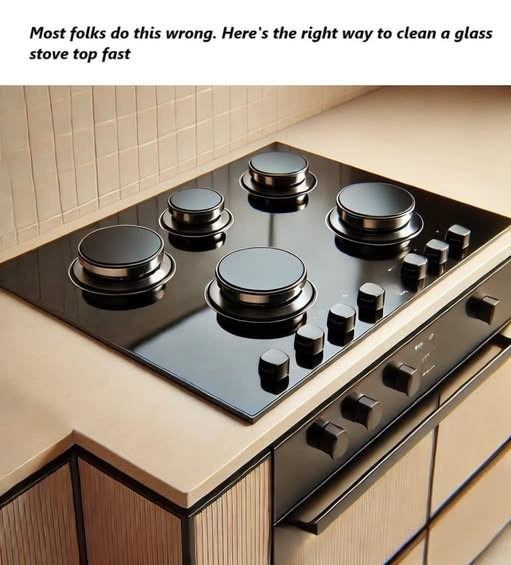
Want to keep your glass stove top sparkling like new?
Spray vinegar lightly over the baking soda to create fizzing bubbles.
Let it sit for 10-15 minutes. This softens burnt-on food.
Gently scrub with a damp microfiber cloth in circular motions.
Use a razor blade scraper carefully at a 45-degree angle to lift stubborn spots. Use gentle pressure and keep the blade clean.
Wipe clean with a damp cloth and dry.
Using Commercial Cleaners
If you prefer, you can buy specialized glass stove top cleaners like Cerama Bryte, Weiman, or Affresh. Follow the label instructions, usually involving spreading a thin layer, letting it sit, then buffing off with a soft cloth.
Chapter 3: Preventing Scratches & Damage
Glass tops can scratch easily. Here’s how to avoid common pitfalls:
Tips:
Avoid abrasive scrubbers or scouring pads. Steel wool, rough sponges, or harsh scrubbing powders can scratch the surface.
Use cookware with smooth, clean bottoms. Dirty or rough pans can leave marks or scratches.
Lift pots and pans instead of sliding. Sliding creates friction and scratches.
Use a burner cover or silicone mat when cooking. These protect the surface from spills and scratches.
Avoid dropping heavy items on the stove top. The glass is tough but not indestructible.
Chapter 4: Dealing with Hard Water Spots & Mineral Deposits
If you have hard water, you might notice white spots or rings from dried water droplets.
How to Clean:
Mix equal parts white vinegar and water in a spray bottle.
Spray the affected areas and let sit for 5–10 minutes.
Wipe with a microfiber cloth until spots vanish.
Rinse with water and dry thoroughly.
Chapter 5: Tips for Keeping Your Stove Top Shiny Long-Term
1. Polish with Olive Oil or Baby Oil
Once clean and dry, buff the surface with a tiny bit of olive or baby oil on a soft cloth. This adds shine and helps repel dust.
2. Use Stove Top Protectors When Not Cooking
Consider using glass stove top protectors or covers to avoid scratches when the stove is not in use.
3. Avoid Spills Getting Burnt On
Wipe spills immediately (once cooled) to avoid stubborn burnt-on stains.
4. Check Your Cookware
Use flat-bottomed pots and pans for even heat and less chance of scratching.
Chapter 6: Natural Cleaning Alternatives
If you prefer to avoid commercial products, here are some natural options:
Lemon juice: The mild acidity helps cut grease and brighten glass. Use with baking soda for stains.
Hydrogen peroxide: Can help with stains but test a small area first.
see next page 💕👇